DATE, MONTH, YEAR

Report name

TECH REPORT

18.02.2025

TECH REPORT

Man

Getting Started

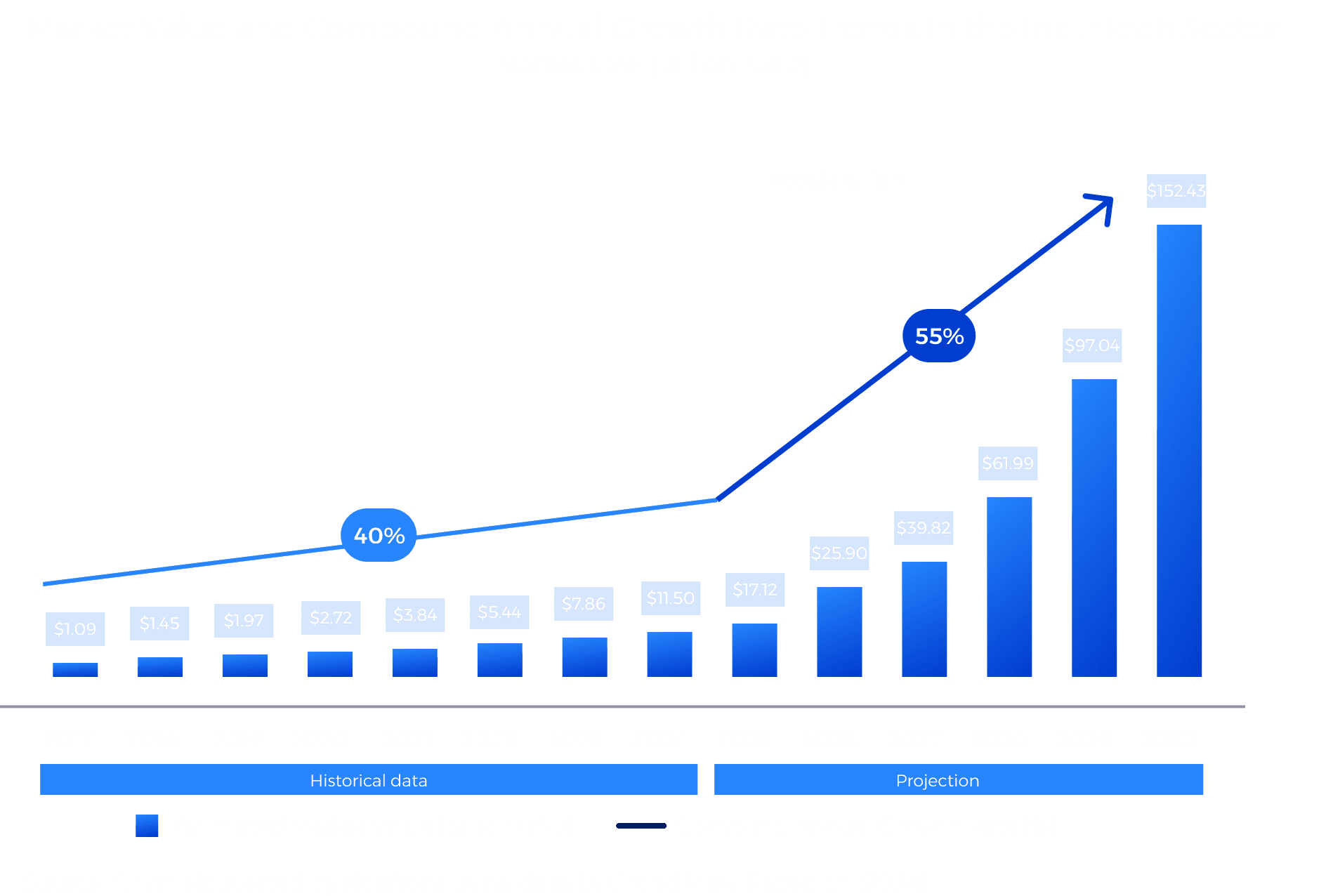
In the insurance world, market size is a fundamental macroeconomic variable that serves as a starting point for assessing growth and dominance in an industry. The global InsurTech market is projected to have an extraordinary growth of approximately 790%, rising from USD $17.1 billion in 2025 to  USD $152.4 billion in 2030. The graph shows that the sector is at a key transition point, shifting from a phase of moderate growth to accelerated expansion, reflecting both market size and CAGR¹.

Getting Started

In the insurance world, market size is a fundamental macroeconomic variable that serves as a starting point for assessing growth and dominance in an industry. The global InsurTech market is projected to have an extraordinary growth of approximately 790%, rising from USD $17.1 billion in 2025 to  USD $152.4 billion in 2030. The graph shows that the sector is at a key transition point, shifting from a phase of moderate growth to accelerated expansion, reflecting both market size and CAGR¹.

Getting Started

In the insurance world, market size is a fundamental macroeconomic variable that serves as a starting point for assessing growth and dominance in an industry. The global InsurTech market is projected to have an extraordinary growth of approximately 790%, rising from USD $17.1 billion in 2025 to  USD $152.4 billion in 2030. The graph shows that the sector is at a key transition point, shifting from a phase of moderate growth to accelerated expansion, reflecting both market size and CAGR¹.

Market Size and Projections

Market Size and Projections

Let's put it down in numbers

Let's put it down in numbers

The Boom of Insurtech
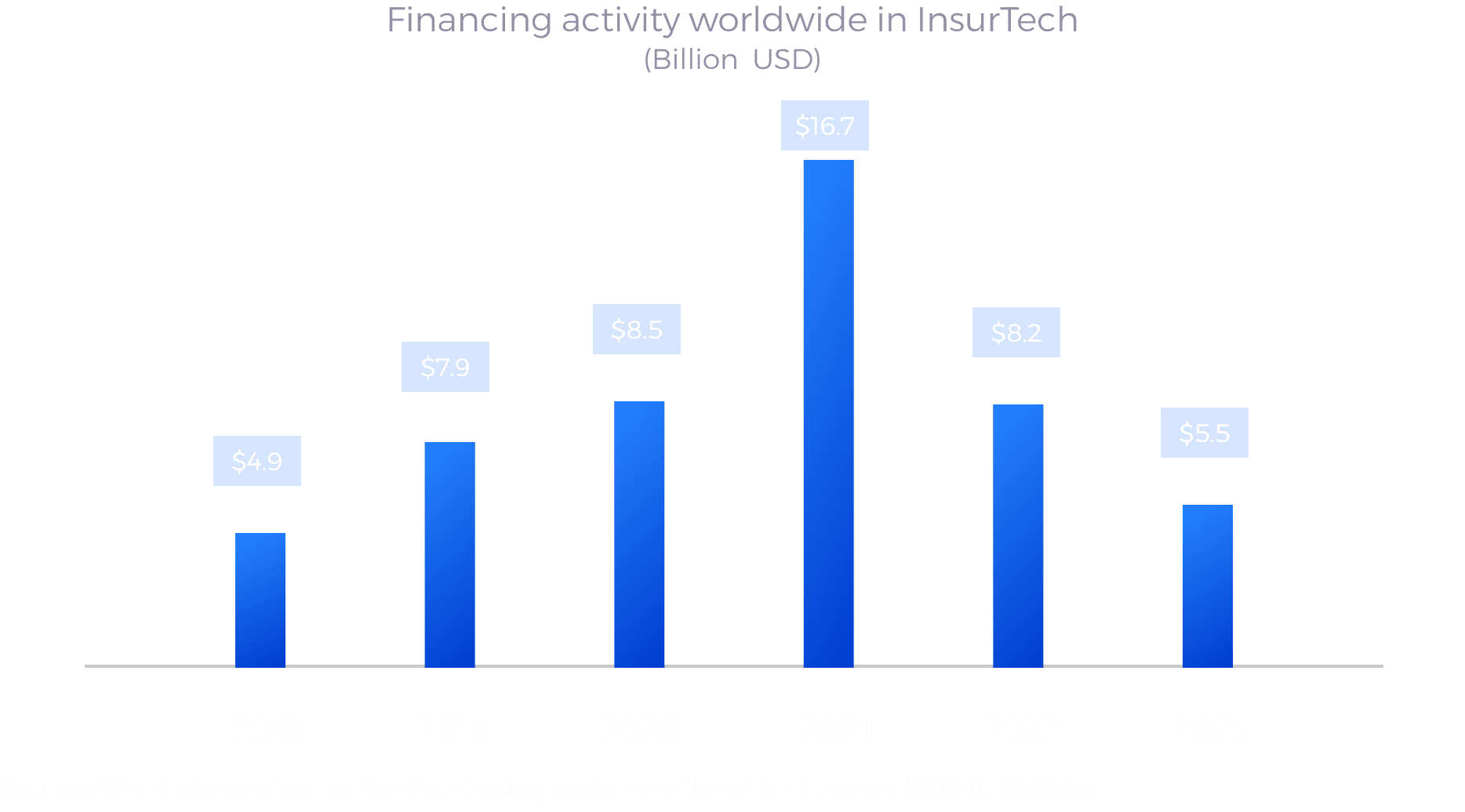
In 2021, the Insurtech sector received strong investments and financing rounds around the world.  While 2022 and 2023 were good years for Insurtech startups,  most funds are still waiting to cash in on relevant liquidity events as a consequence of the 2021 financing rounds. According to different experts, the increase in investment led to a boost in innovation in the industry (Elad & Kinder, 2024).

The Boom of Insurtech
In 2021, the Insurtech sector received strong investments and financing rounds around the world.  While 2022 and 2023 were good years for Insurtech startups,  most funds are still waiting to cash in on relevant liquidity events as a consequence of the 2021 financing rounds. According to different experts, the increase in investment led to a boost in innovation in the industry (Elad & Kinder, 2024).

The Boom of Insurtech
In 2021, the Insurtech sector received strong investments and financing rounds around the world.  While 2022 and 2023 were good years for Insurtech startups,  most funds are still waiting to cash in on relevant liquidity events as a consequence of the 2021 financing rounds. According to different experts, the increase in investment led to a boost in innovation in the industry (Elad & Kinder, 2024).

Why InsurTech Matters?

The general insurance sector (P&C) in the United States achieved an underwriting gain of $9.3 billion in Q1 2024, a significant recovery from the $8.5 billion loss in the same quarter of the previous year. (Deloitte, 2024) Part of this loss was due to a lack of modernization amid the boom in AI and other advanced technologies. These data underscore the importance of modernization and ethical oversight in maintaining competitiveness and customer trust. ​
Beginning of the 5th Industrial Revolution

Beginning of the 5th Industrial Revolution

(1760-1840)

1st Revolution

1st Revolution

Key Technologies: Mechanization, steam engines, mass production​
Insurance Impact: Emergence of basic industrial insurance models​

(1870-1914)

2nd Revolution

2nd Revolution

Key Technologies: Electricity, railroads, and expansion of mass production​
Impact on Insurance: Structured life, property, and liability insurance models​
Key Players: Prudential (UK) and Metropolitan Life (US) led in offering life insurance to urban populations.​

(1960-1990)

3rd Revolution

3rd Revolution

Key Technologies: Computers, internet, and telecommunications.
Insurance Impact: Customer databases, online platforms, and automated processes to streamline operations.
Future Vision: Global connectivity and data-driven decision-making. The widespread use of computers in insurance operations allowed for more accurate risk assessment and policy management.

(2000–2020s)

4th Revolution

4th Revolution

Key Technologies: Big Data, Robotics, and Machine Learning.
Insurance Impact: Rise of InsurTechs (e.g., Lemonade, ZhongAn), with advanced analytics and early AI transforming underwriting and personalization.
Key Players: AXA and Zurich focused on data-driven innovation.

(2020-Present)

5th Revolution

5th Revolution

Key Technologies: AI-human collaboration, ethical technology, sustainability​
Insurance Impact: Human-centric AI enhances decision-making, and customer service bots provide personalized experiences. Focus on sustainable, inclusive, and ethical insurance solutions​
Future Vision: Technology serves to augment human abilities, creating a more human-focused insurance landscape.​

Practical strategies for digital transformation

Practical strategies for digital transformation

1. Insurance Companies

Invest in Scalable Technology: Focus on adopting technologies that are not only cutting-edge but also scalable. This includes cloud computing, AI, and API-first infrastructures, which can grow with the company and adapt to future needs. ​

2. Brokers

Adopt Digital Platforms: Brokers should embrace digital platforms that streamline client interactions, such as CRM systems that track customer data and preferences, and AI tools that analyze this data to offer personalized recommendations.

Let's build together

Want the full scoop?
we’ve got you covered!

Download this report and dive into all the details

Curious for more? Check out all our reports and uncover all the insights

Curious for more?
Check out all our reports and uncover all the insights

Abstract
Home
Title
Title
Title